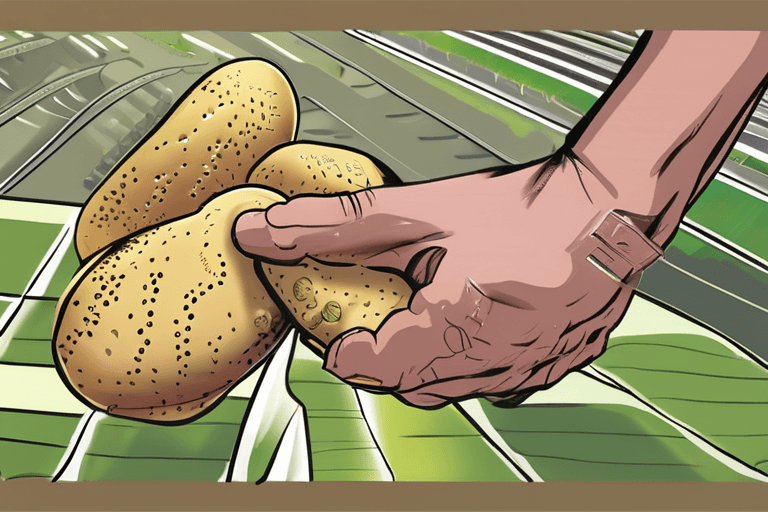
Researchers have made significant strides in the field of genetics and quantum physics, as highlighted in the Nature Podcast's 2025 highlights. A team of scientists has created a pangenome containing the genomes of multiple potato types, which they believe can help make it easier to breed and sequence new varieties. This breakthrough comes after years of struggling with the complex genetics of the potato plant, but improvements in technology have allowed the team to combine sequences and look for subtle differences between varieties.
According to Dr. Sun, the lead researcher on the project, "The pangenome will enable us to identify key genes responsible for desirable traits such as disease resistance and high yields. This will be a game-changer for potato breeding and will help us to develop new varieties that are more resilient and productive." Dr. Sun's team used a combination of next-generation sequencing and bioinformatics tools to create the pangenome, which contains the genomes of over 100 different potato varieties.
In another significant development, hundreds of physicists gathered on the remote North Sea island of Heligoland to celebrate the centenary of physicist Werner Heisenberg's formulation of the mathematics behind quantum mechanics. The conference, which was attended by Nature reporter Lizzie Gibney, brought together some of the world's leading experts in quantum physics to discuss the latest developments in the field. According to Dr. Heisenberg's biographer, "The conference was a fitting tribute to Heisenberg's groundbreaking work, which laid the foundation for our understanding of quantum mechanics."
The potato pangenome and the quantum physics conference are just two examples of the exciting research that has been highlighted in the Nature Podcast's 2025 highlights. These breakthroughs have the potential to transform our understanding of genetics and quantum physics, and could lead to significant advances in fields such as agriculture, medicine, and technology.
The creation of the potato pangenome is a significant achievement, as it will enable researchers to better understand the complex genetics of the potato plant. This knowledge can be used to develop new varieties of potatoes that are more resilient and productive, which could help to address global food security challenges. The conference on Heligoland, meanwhile, marked a major milestone in the development of quantum physics, and highlighted the importance of continued research in this field.
As for what's next, Dr. Sun's team is already working on applying the pangenome to develop new potato varieties. "We're excited to see the impact that this will have on potato breeding and production," Dr. Sun said. "We're also looking forward to collaborating with other researchers to apply this technology to other crops." In the field of quantum physics, researchers are continuing to push the boundaries of our understanding of the subject, with new discoveries and breakthroughs expected in the coming years.











Discussion
Join 0 others in the conversation
Share Your Thoughts
Your voice matters in this discussion
Login to join the conversation
No comments yet
Be the first to share your thoughts!