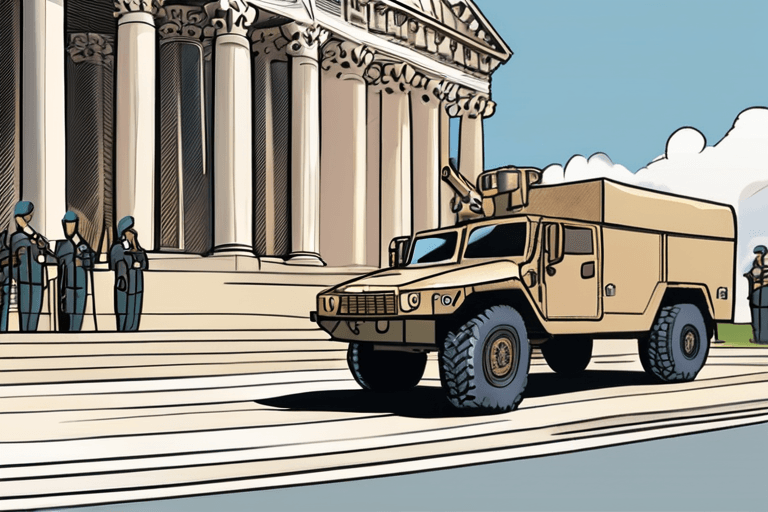
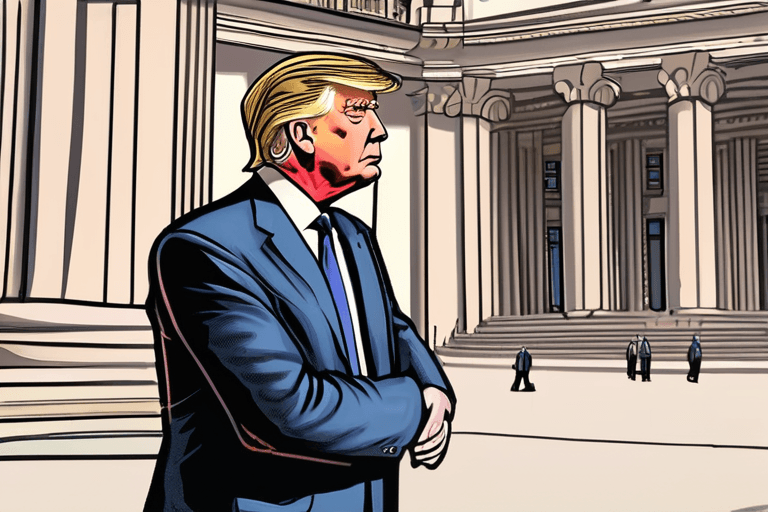
The Supreme Court ruled on Tuesday that President Donald Trump violated federal law when he deployed a few hundred members of the National Guard to quell protests outside of an immigration detention facility in Broadview, Illinois, a decision that marks a rare and significant loss for the former president.
In the 6-3 decision, three Republican justices joined all three of the Court's Democrats in finding that Trump's actions exceeded his authority under the Insurrection Act, which allows the president to deploy troops to maintain order in the event of a domestic insurrection or civil unrest. The Court held that the protests outside the detention facility did not meet the threshold for insurrection or civil unrest, and that Trump's deployment of troops was therefore unlawful.
The decision was seen as a significant limit on the president's authority to use military force against American citizens. "Today's decision is a crucial reminder that the president's powers are not limitless," said Justice Sonia Sotomayor, who wrote the majority opinion. "The Insurrection Act is a tool for maintaining order in the face of genuine threats to public safety, not a means for the president to suppress peaceful protests."
The case, Trump v. Illinois, arose from a series of protests outside the immigration detention facility in Broadview, Illinois, in 2023. The protests were sparked by reports of poor conditions and mistreatment of detainees at the facility. Trump deployed a few hundred members of the National Guard to quell the protests, citing concerns for public safety.
The decision was welcomed by civil liberties groups, who argued that Trump's actions were an overreach of executive power. "This decision is a victory for the rule of law and for the rights of American citizens to protest peacefully," said a spokesperson for the American Civil Liberties Union.
However, some conservative commentators argued that the decision was an overreach of judicial power, and that the Court was imposing its own policy preferences on the president. "Today's decision is a classic example of judicial activism," said a spokesperson for the Heritage Foundation. "The Court is substituting its own judgment for that of the president, and is undermining the authority of the executive branch."
The decision is likely to have significant implications for future presidential actions, and may limit the ability of future presidents to deploy military force against American citizens. The case is also likely to be seen as a significant setback for Trump, who had sought to expand the powers of the presidency during his time in office.
In a statement, the White House said that the administration was "disappointed" by the decision, but would respect the Court's ruling. The case is now closed, and the decision is final.










Discussion
Join 0 others in the conversation
Share Your Thoughts
Your voice matters in this discussion
Login to join the conversation
No comments yet
Be the first to share your thoughts!