Uber and Lyft Partner with Baidu to Trial Robotaxis in UK
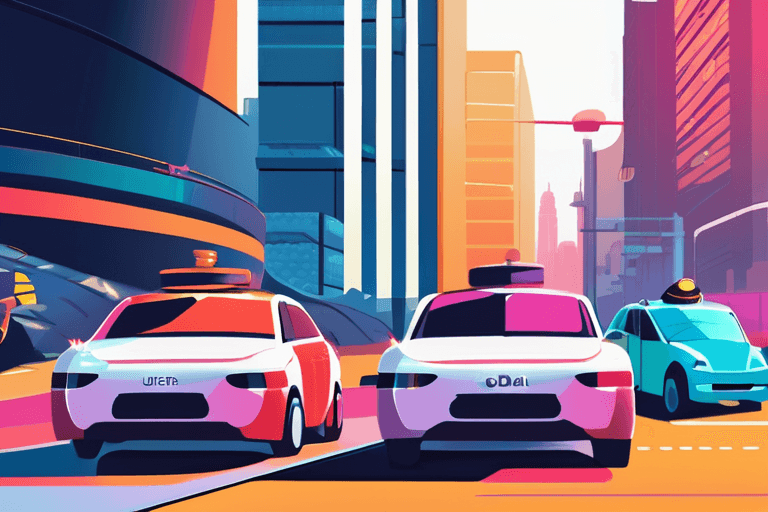
In a significant move towards the integration of self-driving vehicles in the UK, ride-sharing apps Uber and Lyft have announced plans to partner with Chinese tech giant Baidu to trial robotaxis on UK roads. According to a statement released by the companies, the partnership aims to obtain regulatory approval for testing in London by 2026, with the potential to bring millions of autonomous rides to the UK.
Baidu's Apollo Go driverless taxi service, already operational in China, Hong Kong, and Dubai, will be at the forefront of the trial. The service has accumulated millions of rides without a human behind the wheel, according to Baidu's records. Transport secretary Heidi Alexander welcomed the news, stating, "This is another vote of confidence in our plans for self-driving vehicles. We are committed to making the UK a hub for innovation and technology, and this partnership is a significant step towards that goal."
The partnership between Uber, Lyft, and Baidu marks a significant step towards the integration of self-driving vehicles in the UK. Baidu's Apollo Go driverless taxi service has already demonstrated its capabilities in various cities, and the UK trial is expected to provide valuable insights into the technology's feasibility and safety. According to a report by Bloomberg, Baidu's Apollo Go taxis have been operating in dozens of cities, mostly in China, and have gained significant traction among users.
The trial is expected to take place in London, with the companies working closely with regulatory bodies to obtain the necessary approvals. While the partnership has been met with enthusiasm from some quarters, many remain skeptical about the safety and feasibility of self-driving vehicles. However, experts believe that the trial will provide valuable insights into the technology's capabilities and limitations.
According to a report by BBC Technology, Baidu's Apollo Go driverless taxi service has already completed millions of rides without a human behind the wheel. The service uses a combination of sensors, mapping technology, and artificial intelligence to navigate roads and avoid obstacles. While the technology has shown promising results, many experts believe that further testing and refinement are needed before it can be deployed on a large scale.
The partnership between Uber, Lyft, and Baidu is expected to have significant implications for the future of transportation and urban mobility in the UK. As the trial progresses, the companies will work closely with regulatory bodies to address concerns and ensure the safe deployment of self-driving vehicles. With the potential to bring millions of autonomous rides to the UK, the partnership marks a significant step towards a future where self-driving vehicles are a common sight on UK roads.
In a statement, a spokesperson for Uber said, "We are excited to partner with Baidu to bring robotaxis to the UK. This partnership marks a significant step towards the integration of self-driving vehicles in the UK, and we look forward to working closely with regulatory bodies to ensure the safe deployment of this technology." A spokesperson for Lyft also welcomed the partnership, stating, "We believe that self-driving vehicles have the potential to revolutionize the way we travel, and we are excited to be a part of this trial."
The trial is expected to begin in 2026, pending successful regulatory approvals. As the partnership between Uber, Lyft, and Baidu progresses, the UK is likely to become a hub for innovation and technology in the field of self-driving vehicles.










Discussion
Join 0 others in the conversation
Share Your Thoughts
Your voice matters in this discussion
Login to join the conversation
No comments yet
Be the first to share your thoughts!