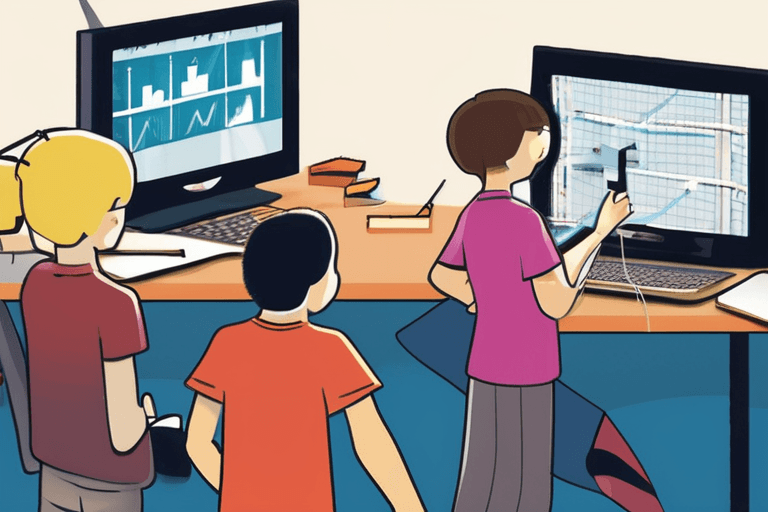
As the sun set on the last day of school before winter break, 13-year-old Aiden and his eighth-grade classmates were engrossed in a heated game of Mafia. But when one of his friends got bored and quit playing, Aiden's friend couldn't help but comment on his short attention span, labeling him a "screenager." This moment was a poignant reminder of a larger trend: the growing concern that young people are spending too much time staring at screens and not enough time engaging with the world around them.
The statistics are alarming. According to a recent study, the average American child spends over 4.5 hours per day on screens, with many teens reporting that they feel anxious or uneasy when they're not constantly connected to their devices. This phenomenon has led to a growing movement to limit screen time and encourage kids to put down their phones.
But is it possible to get kids off their phones for good? The answer lies in a combination of technology, parenting, and a willingness to rethink the way we approach screen time.
For Aiden and his classmates, screen time is a way of life. They spend hours scrolling through social media, playing games, and texting their friends. But as Aiden's friend pointed out, this constant connectedness comes at a cost. "People are less likely to have fun and enjoy being around other people, and they prefer being around technology," Aiden said.
This phenomenon is not unique to Aiden and his friends. According to a recent survey, 60% of teens report feeling anxious or overwhelmed when they're not constantly connected to their devices. This is a far cry from the carefree days of childhood, when kids spent hours playing outside and exploring the world around them.
So what's behind this trend? One major factor is the rise of social media. Platforms like Instagram and TikTok have created a culture of constant comparison and competition, where kids feel pressure to present a perfect online persona. This can lead to feelings of inadequacy and low self-esteem, as well as a deep-seated fear of missing out (FOMO).
But social media is just the tip of the iceberg. The real issue is the way that technology is designed to be addictive. Apps like Facebook and Instagram use algorithms to keep users engaged for as long as possible, using techniques like infinite scrolling and notifications to keep kids hooked.
"It's like they're addicted to the dopamine hit they get from liking and commenting on posts," said Dr. Jean Twenge, a psychologist who has studied the impact of screen time on teens. "They're constantly seeking validation and attention, and they're willing to sacrifice their mental health to get it."
So what can parents do to help their kids break free from the grip of technology? The answer lies in a combination of setting limits, encouraging physical activity, and modeling healthy behavior.
One approach is to use technology to limit screen time. Apps like Freedom and Moment allow parents to set time limits on their kids' devices, while also tracking their screen time and providing insights into their usage habits.
Another approach is to encourage physical activity. Studies have shown that kids who spend more time outdoors are less likely to develop mental health problems and are more likely to have strong social skills.
Finally, parents need to model healthy behavior themselves. This means putting down their own phones and engaging with their kids in the real world.
"It's not just about taking away screens, it's about creating a culture of connection and community," said Dr. Twenge. "We need to be role models for our kids and show them that there's more to life than just staring at a screen."
As Aiden and his friends head into the new year, they're facing a daunting challenge: to put down their phones and engage with the world around them. It won't be easy, but with the right tools and a willingness to rethink the way we approach screen time, it's possible to create a healthier, more balanced relationship between kids and technology.
In the end, it's not about getting kids off their phones for good, but about finding a balance between the digital and physical worlds. By setting limits, encouraging physical activity, and modeling healthy behavior, parents can help their kids develop a healthier relationship with technology and a deeper connection to the world around them.












Discussion
Join 0 others in the conversation
Share Your Thoughts
Your voice matters in this discussion
Login to join the conversation
No comments yet
Be the first to share your thoughts!