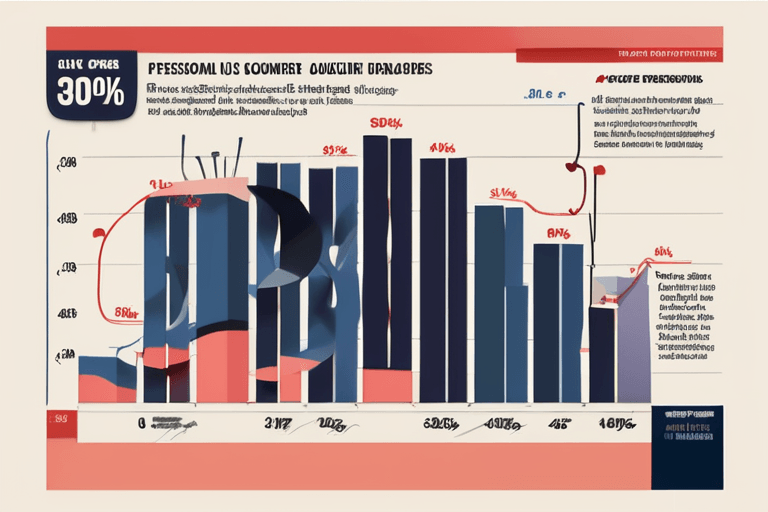
The U.S. economy experienced a significant surge in the third quarter of 2025, with the Commerce Department reporting a 4.3 percent annual growth rate. This acceleration from the previous quarter's growth rate of 3.2 percent has raised hopes among economists and investors that the economy may be more resilient than initially thought.
According to the Commerce Department's data, the roughly $30 trillion economy showed a robust performance in the third quarter, with a strong showing from wealthier households driving the growth. Disposable personal income, after taxes and adjusted for inflation, was flat, indicating that nagging price increases are still eating into purchasing power. However, a barometer of underlying growth that measures both private investment and household consumption held firm, suggesting that the economy is still firing on most cylinders.
The 4.3 percent growth rate exceeded the expectations of some economists, who had forecasted a more modest expansion. Michael Pearce, chief U.S. economist at Oxford Economics, noted that while the data is subject to quarter-to-quarter noise, the overall trend is positive. "Most of the strength is coming from wealthier households," Pearce said.
The strong growth in the third quarter has significant implications for the U.S. economy and financial markets. The S&P 500 index, which tracks the performance of the largest publicly traded companies in the U.S., rose 2.5 percent in the third quarter, with many of the index's components benefiting from the strong economic growth. The Dow Jones Industrial Average also rose 2.2 percent during the same period.
The strong growth is also a positive sign for companies that are heavily exposed to the U.S. economy, such as retailers, automakers, and technology firms. Companies like Amazon, Apple, and Microsoft, which are among the largest and most influential companies in the U.S., are likely to benefit from the strong economic growth.
However, not all companies will benefit equally from the strong growth. Companies that are heavily exposed to the consumer sector, such as retailers and restaurants, may face challenges in the coming months as household incomes and consumer spending power continue to be impacted by price increases.
Looking ahead, the outlook for the U.S. economy remains positive, with many economists forecasting continued growth in the fourth quarter. However, the economy is not without its challenges, and the impact of tariffs and other trade policies on the economy remains a significant concern.
In conclusion, the strong growth in the third quarter of 2025 is a positive sign for the U.S. economy and financial markets. While not all companies will benefit equally from the growth, the overall trend is positive, and many economists are forecasting continued growth in the coming months.












Discussion
Join 0 others in the conversation
Share Your Thoughts
Your voice matters in this discussion
Login to join the conversation
No comments yet
Be the first to share your thoughts!