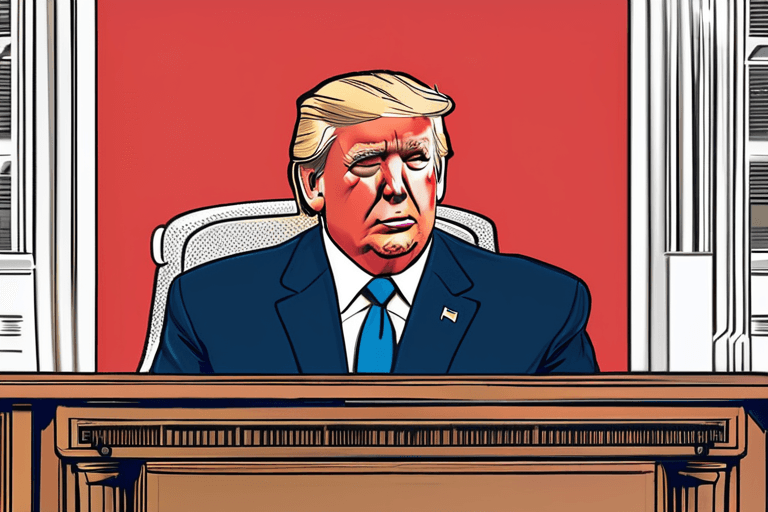
The Supreme Court ruled Tuesday that President Donald Trump violated federal law when he deployed a few hundred members of the National Guard to quell protests outside an immigration detention facility in Broadview, Illinois, a decision that marks a rare and significant loss for the former president.
In a 6-3 decision, the court found that Trump's actions exceeded the authority granted to him under the Insurrection Act, which allows the president to deploy troops to maintain order in the face of a domestic insurrection or rebellion. The justices held that the protests outside the detention facility did not meet the threshold for an insurrection or rebellion, and that Trump's decision to deploy troops was therefore unlawful.
The decision was joined by three Republican justices, including Chief Justice John Roberts, who wrote the majority opinion. "The president's authority under the Insurrection Act is not limitless," Roberts wrote. "It is a power that must be exercised with caution and restraint, and in accordance with the law."
The decision was welcomed by civil liberties groups, which had argued that Trump's actions were an overreach of executive power. "Today's decision is a victory for the rule of law and for the rights of protesters to express themselves peacefully," said a spokesperson for the American Civil Liberties Union.
The case, Trump v. Illinois, arose from a series of protests outside an immigration detention facility in Broadview, Illinois, in 2023. The protests were sparked by reports of poor conditions and mistreatment of detainees at the facility. Trump responded by deploying a few hundred members of the National Guard to quell the protests, which he characterized as a threat to public safety.
The decision marks a significant limit on Trump's authority as president, and is seen as a major victory for civil liberties groups. It also highlights the ongoing debate over the role of the executive branch in responding to domestic protests and demonstrations.
The current status of the decision is that it has been issued by the Supreme Court, and is now final. The next development in the case is likely to be a review of the decision by the lower courts, which may consider whether to enforce the ruling or to seek further review.
In a statement, a spokesperson for the White House said that the administration was "disappointed" by the decision, but would comply with the ruling. The spokesperson noted that the administration had taken steps to address the concerns of protesters and to improve conditions at the detention facility.







Discussion
Join 0 others in the conversation
Share Your Thoughts
Your voice matters in this discussion
Login to join the conversation
No comments yet
Be the first to share your thoughts!