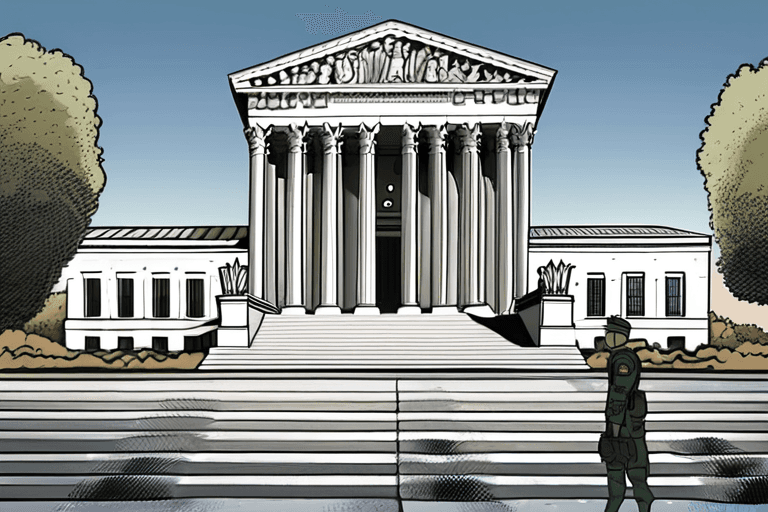
According to court documents, the Supreme Court's decision effectively blocks Trump's plan to deploy the National Guard in Illinois, which was met with strong opposition from the state's governor, J.B. Pritzker. Pritzker had argued that the deployment would be an overreach of federal authority and a threat to the state's sovereignty. In a statement, Pritzker praised the Supreme Court's decision, saying, "Today's ruling is a victory for the rule of law and the Constitution. It confirms that the President does not have the power to unilaterally deploy the National Guard in our state without our consent."
The administration's appeal was based on Trump's assertion that the protests in the Chicago area posed a significant threat to the safety of Immigration and Customs Enforcement agents. However, lower courts rejected this claim, ruling that the protests did not constitute a "rebellion or danger of rebellion" against the federal government. The Supreme Court's decision effectively upholds these lower court rulings, blocking Trump's ability to deploy the National Guard in Illinois.
The Insurrection Act, which Trump invoked in his appeal, allows the president to deploy the military in cases of rebellion or insurrection. However, the act also requires the consent of the state's governor, which Pritzker had refused to give. The Supreme Court's decision highlights the tension between federal and state authority, particularly in cases where the president seeks to assert his power in the face of opposition from state officials.
The ruling has significant implications for the balance of power between the federal government and state governments. It also raises questions about the limits of presidential authority and the role of the judiciary in checking executive power. As the country continues to grapple with issues of immigration and national security, the Supreme Court's decision provides a crucial check on the president's ability to unilaterally deploy the military.
The Supreme Court's decision is the latest development in a long-standing dispute between the Trump administration and state officials over immigration policy. The case is likely to have far-reaching implications for the future of immigration policy and the balance of power between the federal government and state governments.










Discussion
Join 0 others in the conversation
Share Your Thoughts
Your voice matters in this discussion
Login to join the conversation
No comments yet
Be the first to share your thoughts!