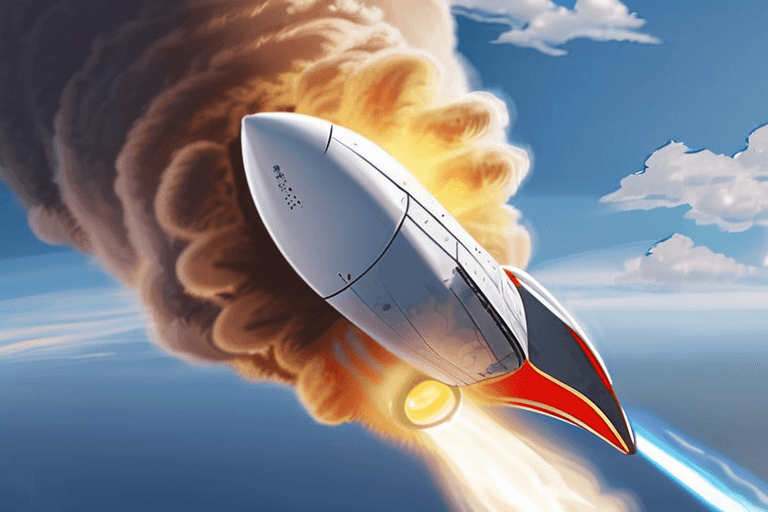
According to CASC, the Long March 12A's upper stage performed as intended, successfully reaching the mission's predetermined orbit. However, the rocket's first stage failed to complete a braking burn to slow down for landing at a prepared location near the edge of the Gobi Desert. The booster instead hurtled through the atmosphere at supersonic speed, impacting in a remote region about 200 miles downrange from the Jiuquan spaceport in northwestern China.
"We are pleased with the successful launch of the Long March 12A, which demonstrates our capabilities in reusable launch technology," said a CASC spokesperson. "While the first stage did not land successfully, we are confident that our engineers will learn from this experience and improve our systems for future missions."
The Long March 12A is a significant development in China's space industry, which has been rapidly expanding in recent years. The country has been investing heavily in reusable launch technology, with the goal of reducing the cost and increasing the efficiency of space launches. The successful launch of the Long March 12A is a major step towards achieving this goal.
Reusable launch technology has the potential to revolutionize the space industry by reducing the cost of access to space and increasing the frequency of launches. This, in turn, could enable more frequent and cost-effective deployment of satellites, as well as the exploration of space. The development of reusable launch technology is also expected to have significant implications for society, including the potential for more frequent and affordable space tourism.
China's space industry has been rapidly expanding in recent years, with the country launching a record number of satellites in 2022. The country's space agency has also been working on a number of ambitious projects, including a lunar sample return mission and a Mars rover.
The successful launch of the Long March 12A is a significant milestone in China's space industry, and it is likely to have a major impact on the global space industry. As the country continues to develop its reusable launch technology, it is expected to play a major role in shaping the future of space exploration and development.
In a statement, a spokesperson for CASC said that the agency is already working on the next generation of reusable launch vehicles, which are expected to be even more advanced and efficient than the Long March 12A. The agency is also planning to conduct further tests and demonstrations of reusable launch technology in the coming months.
The successful launch of the Long March 12A is a significant development in the global space industry, and it is likely to have a major impact on the future of space exploration and development. As the industry continues to evolve and expand, it will be interesting to see how China's reusable launch technology plays a role in shaping the future of space travel and exploration.











Discussion
Join 0 others in the conversation
Share Your Thoughts
Your voice matters in this discussion
Login to join the conversation
No comments yet
Be the first to share your thoughts!