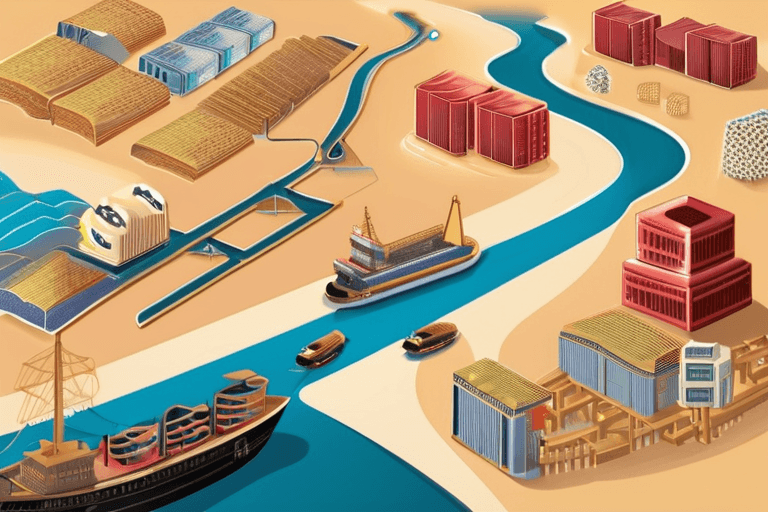
Chinese officials have attributed this growth to the country's "Belt and Road Initiative" (BRI), a massive infrastructure development project aimed at connecting China with other parts of Asia, Europe, and Africa through a network of roads, railways, and ports. The BRI has been instrumental in China's expansion into the Middle East, with the country investing in major projects such as the Saudi Aramco oil refinery and the Egyptian Suez Canal expansion.
"The Middle East is a strategic region for China, given its rich energy resources and geographic location," said a spokesperson for the Chinese Ministry of Commerce. "Our investments in the region are aimed at promoting economic cooperation, improving trade, and enhancing regional stability."
China's growing economic influence in the Middle East has significant implications for the region's energy sector. The country has become a major player in the global oil market, with Chinese companies such as Sinopec and CNOOC investing heavily in oil and gas production in countries such as Saudi Arabia and Iraq.
In addition to energy, China has also been investing in the Middle East's infrastructure sector, with major projects such as the Dubai Expo 2020 and the Qatar World Cup 2022. These investments have not only created jobs and stimulated economic growth but also helped to promote regional cooperation and integration.
The Middle East's strategic location, with its proximity to Europe and Asia, makes it an attractive hub for trade and investment. China's growing economic influence in the region is also driven by its desire to diversify its trade relationships and reduce its dependence on the US market.
As China continues to expand its economic presence in the Middle East, regional leaders are taking note of the country's growing influence. "China's investments in the region are a welcome development, as they have helped to promote economic growth and stability," said a spokesperson for the Saudi Ministry of Foreign Affairs.
Looking ahead, China's economic influence in the Middle East is expected to continue growing, with the country investing in new sectors such as technology and finance. As the region's largest trading partner, China is likely to play an increasingly important role in shaping the Middle East's economic future.
In conclusion, China's growing economic influence in the Middle East is a significant development that has far-reaching implications for the region's energy sector, infrastructure, and trade. As the country continues to invest in the region, regional leaders are taking note of China's growing presence and are working to strengthen economic ties with Beijing.









Discussion
Join 0 others in the conversation
Share Your Thoughts
Your voice matters in this discussion
Login to join the conversation
No comments yet
Be the first to share your thoughts!