In a groundbreaking achievement, a team of researchers has successfully rolled back human pluripotent stem cells to an eight-cell embryo-like stage, a feat that has the potential to revolutionize the field of regenerative medicine. This remarkable breakthrough, published in the journal Nature, has sent shockwaves throughout the scientific community, sparking excitement and curiosity about the possibilities that lie ahead.
To understand the significance of this discovery, it's essential to delve into the world of embryonic stem cells and the complex process of cellular development. Embryonic stem cells are pluripotent, meaning they have the ability to differentiate into any cell type in the body, making them a valuable resource for regenerative medicine. However, these cells are typically harvested from embryos, raising ethical concerns and limiting their availability.
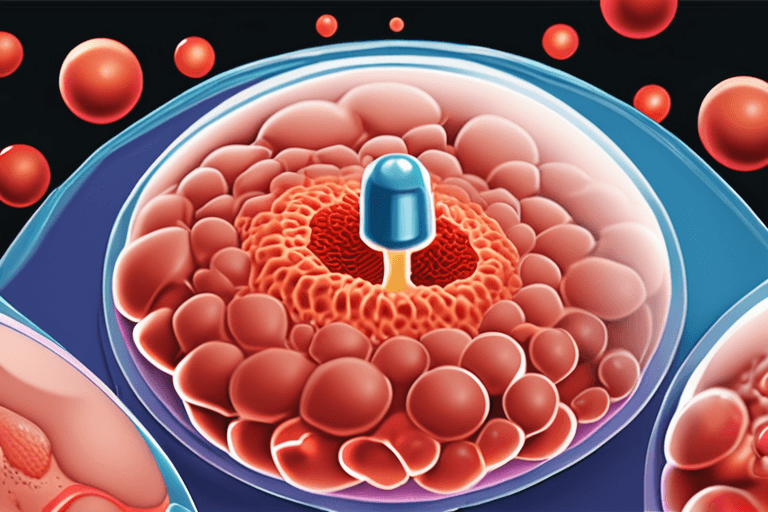
The team of researchers, led by Dr. Guang-Hui Liu, has developed a novel approach to reprogram human pluripotent stem cells, allowing them to revert to an eight-cell embryo-like stage. This stage, known as the morula, is a critical period in embryonic development, where the cells begin to differentiate and form the foundation of the embryo.
The researchers achieved this remarkable feat by using a combination of genetic and epigenetic modifications, which allowed them to reprogram the stem cells to express the genes and epigenetic markers characteristic of the morula stage. The resulting cells, dubbed "blastoids," were able to self-organize and form complex structures, including a primitive streak, which is a key feature of embryonic development.
The implications of this discovery are far-reaching, with potential applications in regenerative medicine, tissue engineering, and even cancer research. By being able to revert stem cells to an earlier stage of development, researchers may be able to better understand the underlying mechanisms of cellular differentiation and development, leading to new insights and treatments for a range of diseases.
Dr. Liu and his team are quick to acknowledge the significance of their discovery, saying, "This breakthrough has the potential to revolutionize the field of regenerative medicine, enabling us to better understand the complex processes of cellular development and differentiation. We are excited to explore the possibilities that this technology offers and to collaborate with other researchers to push the boundaries of what is possible."
The team's approach has also sparked interest in the field of totipotent stem cells, which have the ability to give rise to an entire organism. Totipotent stem cells are typically found in early embryos, but the researchers' ability to reprogram human pluripotent stem cells to an eight-cell embryo-like stage raises the possibility of creating totipotent stem cells from adult cells.
As the scientific community continues to explore the possibilities of this technology, it's clear that the potential applications are vast and varied. From regenerative medicine to cancer research, the ability to revert stem cells to an earlier stage of development has the potential to revolutionize our understanding of cellular biology and unlock new treatments for a range of diseases.
In the words of Dr. Liu, "The possibilities are endless, and we are excited to see where this technology takes us. We are committed to continuing our research and exploring the full potential of this breakthrough, and we look forward to collaborating with other researchers to push the boundaries of what is possible."
As the field of regenerative medicine continues to evolve, it's clear that the discovery of Dr. Liu and his team is a significant step forward, offering new hope and possibilities for the treatment of a range of diseases. With its potential to revolutionize our understanding of cellular biology and unlock new treatments, this breakthrough is a testament to the power of human ingenuity and the boundless potential of scientific research.








Discussion
Join 0 others in the conversation
Share Your Thoughts
Your voice matters in this discussion
Login to join the conversation
No comments yet
Be the first to share your thoughts!