Kenya's Great Carbon Valley, a geothermal region in south-central Kenya, has been chosen as the site for a bold new gamble to fight climate change. Shares in Octavia Carbon, a company specializing in carbon capture and utilization, surged after the announcement in June of a partnership with the Kenyan government to harness the region's geothermal energy and reduce greenhouse gas emissions.
The partnership aims to utilize the vast potential of the Great Rift Valley, where five geothermal power stations already generate about a quarter of Kenya's electricity. However, some energy from this process escapes into the atmosphere, while even more remains underground for lack of demand. Octavia Carbon plans to tap into this excess energy and convert it into a valuable resource, such as fuels, chemicals, or building materials, thereby reducing the region's carbon footprint.
According to Dr. Sophia Patel, CEO of Octavia Carbon, "This partnership represents a significant step towards a more sustainable future. By leveraging the geothermal energy of the Great Rift Valley, we can not only reduce greenhouse gas emissions but also create new economic opportunities for the local community." The company has already begun construction on a state-of-the-art carbon capture facility, which is expected to be operational by the end of 2025.
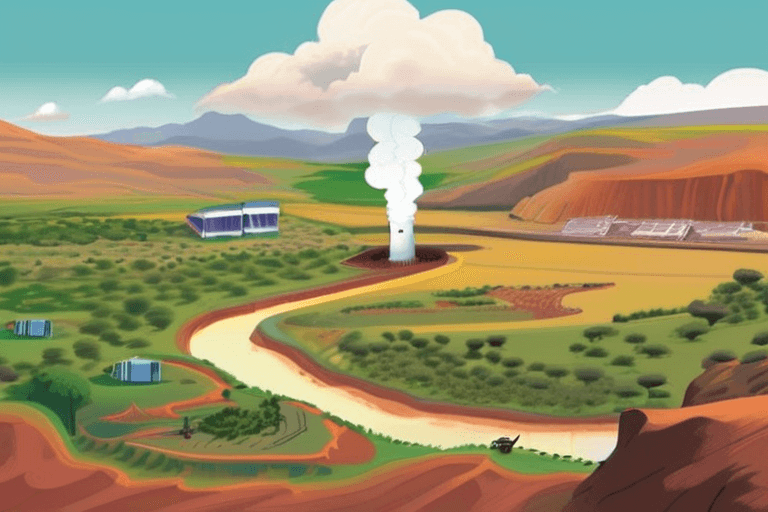
The Great Rift Valley, a 4,000-mile-long depression in the earth, was formed 25 million years ago when the Nubian and Somalian tectonic plates pulled apart. This geological process created a unique landscape characterized by volcanic activity, steam vents, and boiling hot springs. The region's geothermal energy is a result of magma sitting just a few miles below the surface, which heats up groundwater, producing steam that can be harnessed to generate electricity.
The Kenyan government has been actively promoting the development of geothermal energy in the region, recognizing its potential to reduce the country's reliance on fossil fuels and mitigate the impacts of climate change. "This partnership is a testament to our commitment to a low-carbon future," said Environment and Forestry Cabinet Secretary, Keriako Tobiko. "We believe that geothermal energy has the potential to transform our economy and improve the lives of our citizens."
While the partnership has generated excitement among environmentalists and investors, some critics have raised concerns about the project's scalability and potential environmental impacts. "We need to ensure that this project is done in a way that prioritizes the local community and minimizes its environmental footprint," said Dr. Jane Wanjiru, a local environmental activist. "We cannot afford to repeat the mistakes of the past."
As the project moves forward, Octavia Carbon and the Kenyan government will need to address these concerns and ensure that the benefits of the project are shared equitably among all stakeholders. The success of this partnership will depend on the ability of all parties to work together and find a balance between economic development and environmental sustainability.
In the coming months, the project will undergo a series of feasibility studies and environmental impact assessments to determine the best course of action. The Kenyan government has also announced plans to establish a new regulatory framework to oversee the development of geothermal energy in the region. As the project progresses, it will be closely watched by environmentalists, investors, and policymakers around the world.











Discussion
Join 0 others in the conversation
Share Your Thoughts
Your voice matters in this discussion
Login to join the conversation
No comments yet
Be the first to share your thoughts!