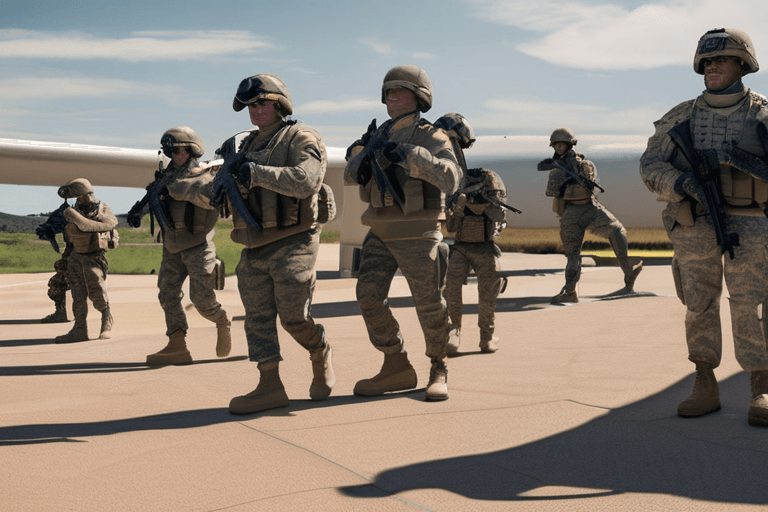
The United States has signed security agreements with Paraguay, Ecuador, Peru, and Trinidad and Tobago in the past week, allowing for the deployment of US troops across Latin America and the Caribbean. The agreements, which include airport access and joint operations against narco-terrorists, have been met with warnings from Venezuelan President Nicolás Maduro that the Trump administration's actions may destabilize the entire region.
According to sources, the agreements were signed quietly by the White House, while the US military campaign against Venezuela continues to escalate. The campaign, which has resulted in the deaths of over 100 people in the Caribbean and the Pacific, has been accompanied by a blockade on oil tankers under sanctions and the seizure of vessels. The US Navy's new Golden Fleet initiative, announced by Donald Trump at his Mar-a-Lago resort in Florida, has been touted as a key component of the administration's strategy in the region.
Venezuelan President Nicolás Maduro has expressed concerns that the US actions may have far-reaching consequences for the region. "This is gunboat diplomacy on steroids," Maduro said in a statement. "The US is using its military might to try to impose its will on our region, and it's a recipe for disaster." Maduro warned that the US actions may destabilize the entire region, leading to a surge in migration and economic instability.
The security agreements with Paraguay, Ecuador, Peru, and Trinidad and Tobago are part of a broader US strategy to expand its military presence in the region. The agreements allow for the deployment of US troops for joint operations against narco-terrorists and provide access to airports and other military facilities. The agreements have been welcomed by some regional leaders, who see them as a key component of the US commitment to regional security.
However, others have expressed concerns that the agreements may be used to further US interests in the region, rather than to address the underlying security challenges. "These agreements are a clear example of the US trying to impose its will on our region," said a spokesperson for the Venezuelan government. "We need to see a more nuanced approach to regional security, one that takes into account the needs and concerns of all countries in the region."
The current status of the US military campaign against Venezuela remains unclear, with reports of airstrikes and the seizure of vessels continuing to emerge. The US Navy's Golden Fleet initiative is expected to play a key role in the campaign, with the deployment of advanced naval vessels and aircraft to the region. As the situation continues to unfold, regional leaders and international observers will be watching closely to see how the US actions play out.
In the meantime, the US has maintained that its actions are necessary to address the security challenges in the region. "We are committed to working with our regional partners to address the security challenges in the region," said a spokesperson for the US State Department. "These agreements are an important step in that process, and we look forward to continuing to work with our partners to build a more secure and stable region."










Discussion
Join 0 others in the conversation
Share Your Thoughts
Your voice matters in this discussion
Login to join the conversation
No comments yet
Be the first to share your thoughts!